Emergency Support
+91 7774 223344Pediatrics
Fever in Children: When to Treat at Home and When to See a Doctor
Medical Disclaimer: This article is AI-assisted and intended for general informational purposes only. It does not replace professional medical advice, diagnosis, or treatment. Please consult a qualified healthcare specialist for advice specific to your condition. Read full disclaimer
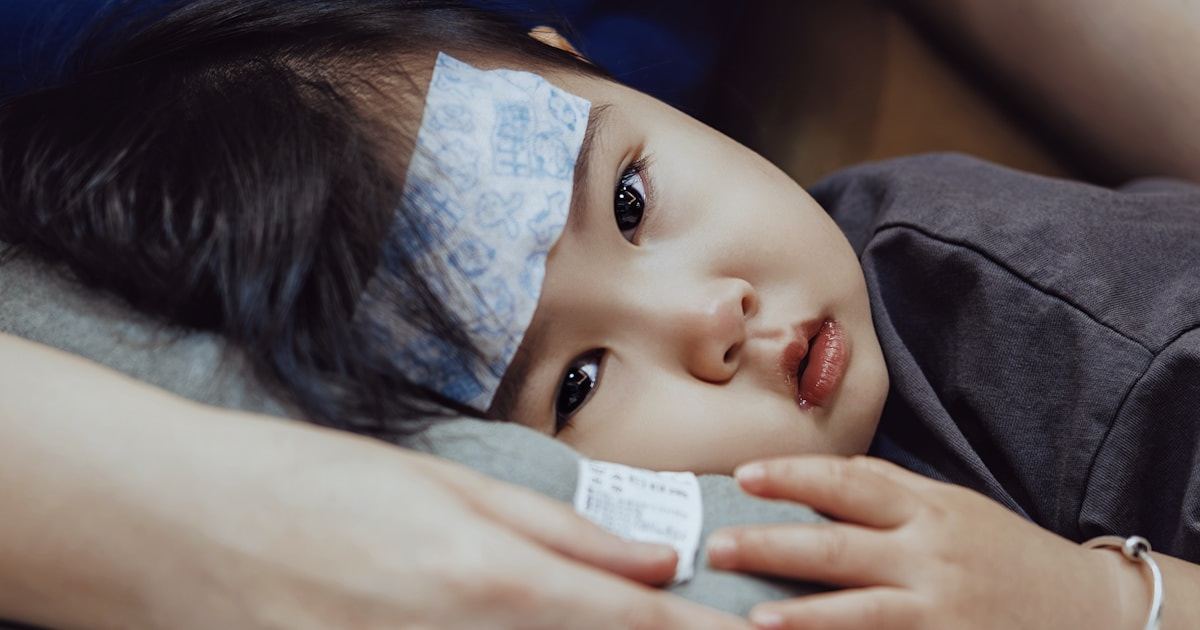
Fever is the single most common reason children are brought to a clinic, and the single most common reason parents lie awake. It is worth saying clearly at the start: fever itself is not the illness. It is the body's normal response to infection, it helps fight that infection, and the height of the temperature is a poor guide to how serious the underlying cause is. A child with 39°C who is drinking and playing between spikes is usually far less concerning than a child with 38°C who is limp and refusing fluids. This guide explains what to watch, what to do, and exactly when fever in children needs a doctor.
Measuring Temperature Properly
Fever is a temperature of 38°C (100.4°F) or above. How you measure it matters.
| Method | Suitable for | Notes |
|---|---|---|
| Digital thermometer, armpit | All ages, especially under 5 | Safe and practical; hold the arm down firmly |
| Digital thermometer, mouth | Over about 5 years | Wait 15 minutes after hot or cold drinks |
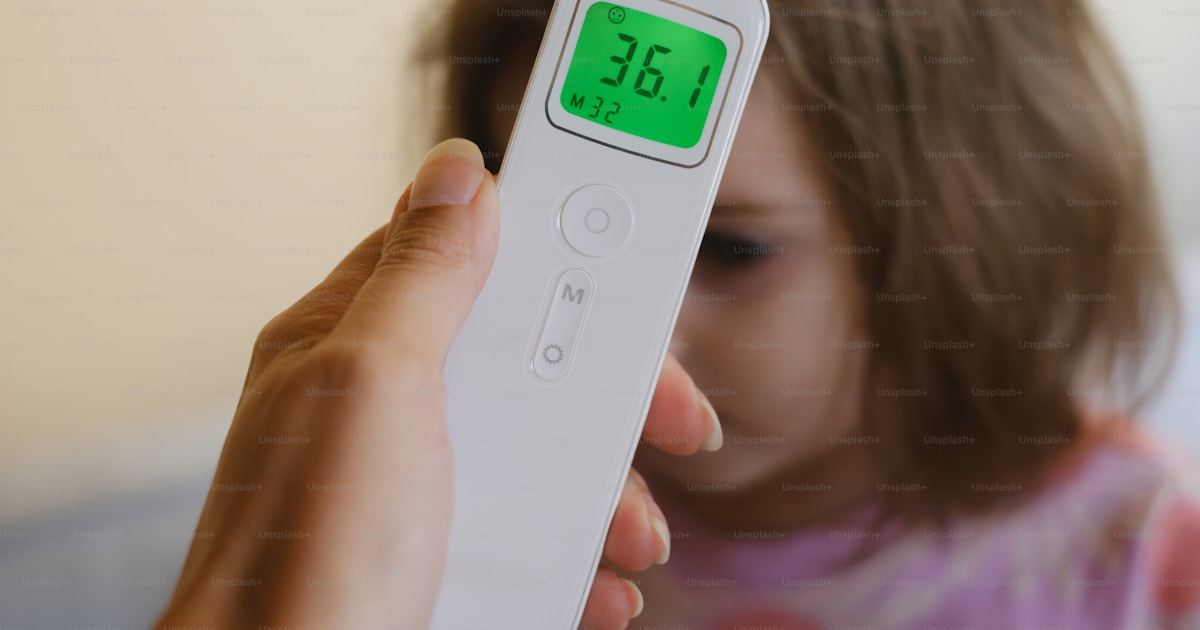
| Infrared forehead or ear | Quick screening | Convenient but less consistent; confirm a borderline reading |
| Feeling the forehead | Not a measurement | Unreliable in both directions — use a thermometer |
| Mercury thermometer | Avoid | Breakage risk; digital is safer and just as accurate |
"Treat the child, not the thermometer. How they are drinking, how alert they are and how they are breathing tells you far more than the number."
What to Do at Home
- Fluids first. This is the most important thing. Offer small amounts frequently — breast milk, water, oral rehydration solution, diluted juice, soup, coconut water. Fever increases fluid loss.
- Dress lightly. One thin layer. Do not bundle a feverish child in blankets, which traps heat.
- Keep the room comfortable and well ventilated.
- Let them rest and eat what they will. Reduced appetite for a day or two is normal; fluids matter far more than food.
- Give paracetamol for discomfort, not for the number. A child who is comfortable at 38.5°C does not need medicine.
- Check on them overnight if the fever is high or they seem unwell.
Medicines: doses and cautions
- Paracetamol is the first choice, dosed strictly by the child's weight, not age, and not more often than every four to six hours, with a maximum of four doses in twenty-four hours. Ask your doctor or pharmacist to write the exact millilitres for your child's current weight on the bottle.
- Ibuprofen may be used in some situations on medical advice, but should be avoided if the child is dehydrated, vomiting, has kidney problems, or if dengue is a possibility, because it increases bleeding risk. During monsoon fever season this matters — see monsoon fevers and when they need the ER.
- Never give aspirin to a child with fever.
- Do not alternate paracetamol and ibuprofen without medical advice; it causes dosing errors.
- Check every syrup for its strength. Different brands have different concentrations, and using the old dose with a new bottle is a common cause of overdose.
- Use the measuring device supplied, never a kitchen spoon.
What not to do
- No cold water or ice baths, and no sponging with cold water or spirit. These cause shivering, which raises core temperature, and can be dangerous.
- Tepid sponging is no longer routinely recommended; it does not shorten illness and often distresses the child.
- Do not force food.
- Do not overwrap to "sweat out" a fever.
Warning Signs: When to See a Doctor
Go to hospital immediately, at any hour
- Any fever in a baby under three months, whatever the child looks like
- Difficulty breathing, fast breathing, grunting, or the chest sucking in between the ribs
- A rash that does not fade when pressed with a glass
- Blue, mottled or very pale skin, or cold hands and feet with a hot body
- Drowsiness, difficulty waking, floppiness, or a weak high-pitched cry
- A fit or convulsion
- Neck stiffness, severe headache, or intolerance of light
- A bulging soft spot in a baby
- Persistent vomiting, or inability to keep fluids down
- No urine for eight to twelve hours, no tears when crying, a dry mouth or sunken eyes
- Severe or worsening abdominal pain
- Any bleeding — gums, nose, or blood in vomit or stool
See a doctor the same day or next morning
- Fever in an infant aged three to six months
- Fever lasting more than three days without improvement
- Fever that settles then returns after a few days
- Ear pain, sore throat with difficulty swallowing, burning urination, or a limp
- A child who is much less active than usual even when the fever comes down
- Any child with a chronic condition, on immunosuppressants, or with a weak immune system
Febrile Seizures: Frightening, Usually Harmless
Around one in twenty children between six months and five years has a fit during a fever. To watch, it is terrifying. In the great majority of cases it causes no lasting harm and does not mean the child has epilepsy.
What to do during a seizure
- Stay calm and note the time.
- Lay the child on their side on a safe, flat surface away from hard or sharp objects.
- Do not put anything in the mouth — no spoon, no finger, no cloth, no onion, no key. The child cannot swallow their tongue.
- Do not restrain the movements or try to hold the limbs still.
- Loosen tight clothing around the neck.
- Call for help immediately if the fit lasts more than five minutes, if breathing is difficult, if it repeats, or if the child does not recover normally afterwards.
Every first febrile seizure should be assessed by a doctor to confirm the diagnosis and exclude meningitis and other causes.
When Fever Is Not Just a Virus
In Surguja, particularly after the rains, fever carries a wider differential than a simple viral illness. Dengue, malaria, typhoid and scrub typhus all need testing rather than watchful waiting when a fever crosses three days. Our guide to monsoon fevers in Surguja covers those patterns. Fever with fast breathing points towards pneumonia in children; fever with loose motions towards diarrhoea and dehydration; fever with burning urination towards a urinary infection, which in a young child always needs proper investigation.
Your Paediatric Team in Ambikapur
If your child has any warning sign, do not wait for morning. Our paediatric department and 24-hour emergency service assess children of all ages, with laboratory support and paediatric intensive care available at all hours. Related reading includes newborn care in the first 40 days, wheezing and asthma in children and child development milestones. Meet Dr. Ankit Gupta and Dr. Megha Goyal, see the full consultant team, browse all clinical departments, or book an appointment here.
"Parents worry that a high fever will harm the brain. It will not. What harms children is the illness behind an unremarkable fever going unnoticed because the number looked reassuring."
Watch: Related Videos
Related health videos from the Sankalp Hospital YouTube channel.
 Normal Delivery से डर लग रहा था | Patient Testimonial | Dr Ankita #sankalphospital #newbornbaby
 Low Amniotic Fluid Pregnancy | Second Opinion Saved My Baby | Sankalp Hospital Testimonial
Frequently Asked Questions
Related Articles