Emergency Support
+91 7774 223344Pediatrics
Wheezing and Asthma in Children: Signs, Triggers and Treatment
Medical Disclaimer: This article is AI-assisted and intended for general informational purposes only. It does not replace professional medical advice, diagnosis, or treatment. Please consult a qualified healthcare specialist for advice specific to your condition. Read full disclaimer
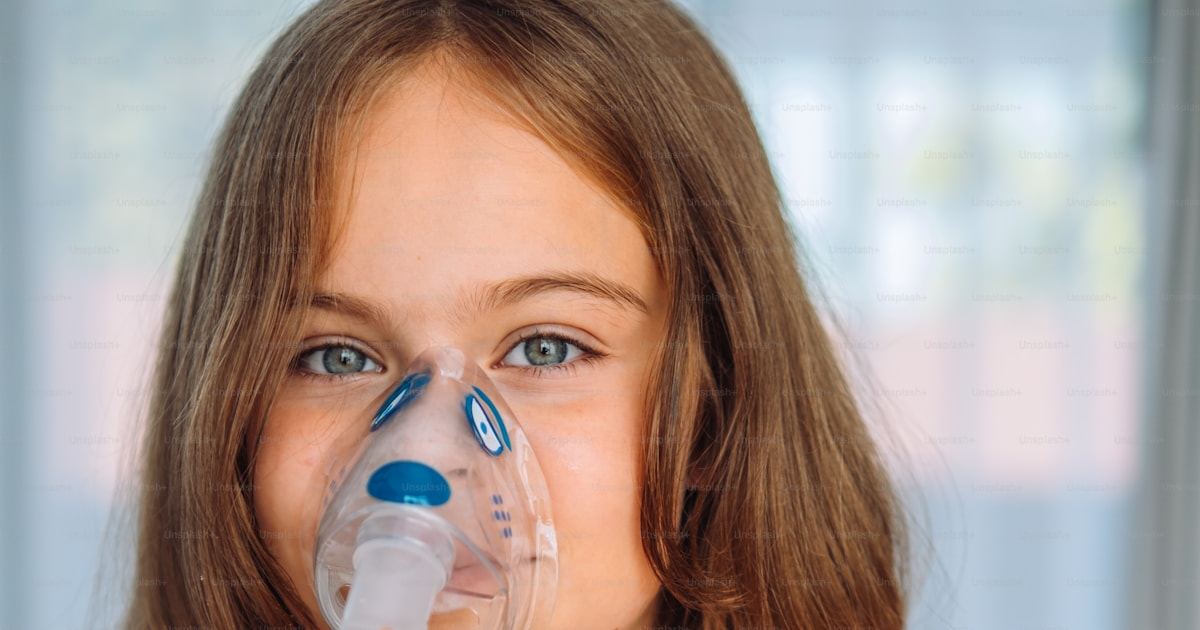
Two beliefs cause most of the harm in childhood asthma, and they pull in opposite directions. The first is that a child who wheezes with every cold has asthma and needs lifelong medication. The second, far more damaging, is that inhalers are dangerous, addictive or a last resort, and should be avoided in favour of syrups and tablets. Both are wrong. This guide explains what wheezing and asthma in children actually mean, why inhaled treatment is the safest option rather than the strongest, and the signs of an attack that needs emergency care.
What Wheezing Is
A wheeze is a high-pitched whistling sound made when air is forced through narrowed airways, usually heard when breathing out. In children the airways are small to begin with, so relatively minor swelling produces a lot of noise. That is why wheezing is common in the under-fives and why most of it is not asthma.
| Cause | Typical picture |
|---|---|
| Viral wheeze | Wheeze only with colds, in an otherwise well child; very common under five and often outgrown |
| Asthma | Recurrent wheeze, cough and breathlessness with triggers beyond infection, often with night symptoms and a family history |
| Bronchiolitis | First episode in an infant, with a cold, fast breathing and feeding difficulty |
| Inhaled foreign body | Sudden onset in a well child, often one-sided — a medical emergency |
| Pneumonia | Fever with fast breathing; see pneumonia in children |
| Reflux or allergy | Wheeze with feeding, or with clear allergic triggers |
"A wheeze that only ever appears with a cold is usually a small airway, not a disease. A wheeze that appears at night, after running, or around dust is a different story."
Signs That Point Towards Asthma
- Recurrent episodes of wheeze, cough and breathlessness, not just one
- Night-time or early morning cough that wakes the child — often the only symptom
- Cough or wheeze after running, laughing or crying
- Symptoms triggered by dust, smoke, cold air, pollen or animals, not only by colds
- A pattern of colds that "always go to the chest" and take weeks to clear
- Chest tightness, described by older children
- Family history of asthma, allergic rhinitis or eczema
- Personal history of eczema or allergic rhinitis, which frequently accompany asthma. Persistent nasal symptoms are worth treating too — see chronic sinusitis or a stubborn cold
- Clear improvement with a bronchodilator inhaler, which is itself diagnostically useful
In children under five there is no reliable breathing test, so diagnosis rests on the pattern of symptoms, the response to treatment and the exclusion of other causes. From about six years, spirometry can be used.
Why Inhalers Are the Safest Option
This deserves stating plainly, because reluctance to use inhalers is the single biggest obstacle to good asthma control in our clinics.
- An inhaler delivers medicine directly to the airways in microgram doses. A syrup or tablet must travel through the whole body in far larger doses to achieve the same effect in the lungs.
- That means fewer side effects, not more. The inhaled route is chosen precisely because it is gentler.
- Inhalers are not addictive. A child who needs one frequently has poorly controlled asthma, not dependence.
- They are not a last resort. Inhaled treatment is first-line in every international guideline.
- Preventer inhalers used correctly reduce attacks, hospital visits and school absence, and allow normal sport and play.
- Untreated asthma carries the real risk — repeated attacks, disturbed growth and sleep, and in severe cases, death.
The two types of inhaler
- Reliever (bronchodilator). Opens the airways within minutes during symptoms. Used as needed. Needing it more than twice a week is a signal that control is inadequate.
- Preventer (inhaled corticosteroid). Taken every day, whether or not there are symptoms, to reduce airway inflammation. It does nothing during an attack and everything to prevent one. Stopping it because the child is well is the commonest reason asthma flares.
Rinse the mouth and spit out after using a preventer inhaler, to avoid oral thrush and hoarseness.
Common Triggers, and What to Do About Them
- Tobacco smoke. The most important avoidable trigger. No smoking in the house or vehicle, by anyone, ever.
- Cooking smoke from solid fuel; improve ventilation and stove type where possible.
- Dust and dust mites. Damp-dust rather than sweep, wash bedding in hot water weekly, avoid heavy carpets and soft toys on the bed.
- Mosquito coils, incense and strong perfumes. Frequently overlooked household triggers.
- Cold air, and seasonal change.
- Viral infections, the commonest trigger in young children.
- Exercise. The answer is better control, not less sport. A well-controlled child should play normally.
- Pollen, pets and moulds.
- Air pollution, including during crop burning and festival periods.
Recognising a Severe Attack
What to do while getting there
- Keep the child sitting upright; do not lay them flat.
- Give the reliever inhaler through a spacer as your written action plan directs.
- Stay calm — panic worsens breathing for both of you.
- Do not give sedatives or cough syrups.
- Go to hospital; do not wait to see whether it settles.
Living Well With Childhood Asthma
- Ask for a written asthma action plan setting out daily medicines, what to do when symptoms start, and when to seek emergency help. Give a copy to the school.
- Check inhaler technique at every visit. Poor technique, not weak medicine, is the most common reason treatment appears to fail.
- Keep the reliever accessible at home and school, and check the expiry date.
- Do not stop the preventer because the child is well. That is the medicine keeping them well.
- Keep up routine immunisations, and consider annual influenza vaccination.
- Treat allergic rhinitis, which worsens asthma when left alone.
- Encourage sport. A child whose asthma stops them playing is a child whose asthma is not adequately controlled.
- Monitor growth at each review, as part of routine care.
Your Paediatric Team in Ambikapur
If your child wheezes repeatedly, coughs at night, or gets breathless with running, ask for a proper assessment rather than another course of syrup. Our paediatric department provides diagnosis, inhaler and spacer training, written action plans, nebulisation and emergency care, with support from the ENT department where allergic rhinitis is a major factor. Related reading includes pneumonia in children, fever in children and child development milestones. Meet Dr. Ankit Gupta and Dr. Megha Goyal, see the full consultant team, browse all clinical departments, or book an appointment here.
"Parents fear the inhaler and accept the attacks. It should be the other way round. The inhaler is the small, safe intervention; the attack is the risk."
Watch: Related Videos
Related health videos from the Sankalp Hospital YouTube channel.
 Normal Delivery से डर लग रहा था | Patient Testimonial | Dr Ankita #sankalphospital #newbornbaby
 Low Amniotic Fluid Pregnancy | Second Opinion Saved My Baby | Sankalp Hospital Testimonial
Frequently Asked Questions
Related Articles