Emergency Support
+91 7774 223344Orthopedics
World Osteoporosis Day: The Bone Check Most Women Over 45 Never Get
Medical Disclaimer: This article is AI-assisted and intended for general informational purposes only. It does not replace professional medical advice, diagnosis, or treatment. Please consult a qualified healthcare specialist for advice specific to your condition. Read full disclaimer
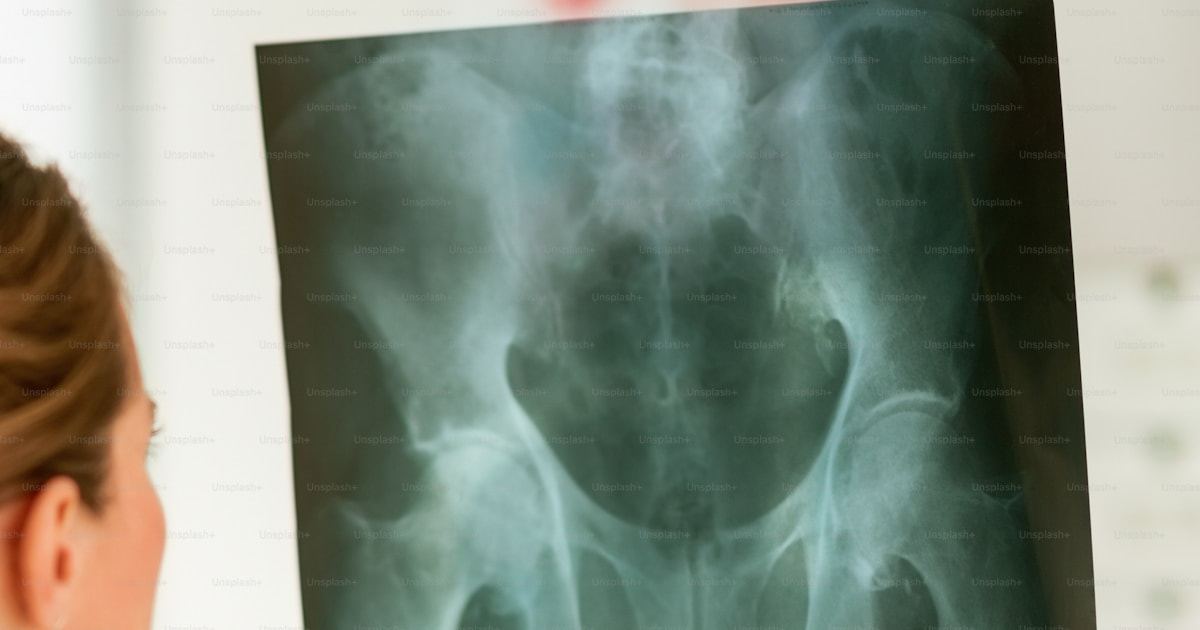
World Osteoporosis Day falls on 20 October, and it exists for a specific reason: osteoporosis is the only common serious disease that most people first discover through a broken bone. There is no ache that warns you, no swelling, no test result that turns up incidentally on a routine blood panel. Bone thins quietly for years, and then a slip in the bathroom or a stumble off a step produces a fracture that should never have happened from a fall that small. This article is aimed at the women over 45 across Surguja who have never had osteoporosis screening in Ambikapur — and at the families who assume back pain and stooping are simply what age looks like.
Why Osteoporosis Has No Symptoms Until a Fracture Happens
Bone is living tissue in constant turnover. Old bone is removed and new bone laid down throughout life. Until roughly the age of 30 the balance favours building; afterwards it slowly tilts the other way. In women, the fall in oestrogen at menopause accelerates that loss sharply, and several years of rapid bone loss can pass in the mid-forties to mid-fifties with no sensation whatsoever.
By the time symptoms appear, they are usually the consequences rather than warnings:
- A fracture from a minor fall — wrist, hip or shoulder from a fall at standing height
- Loss of height, often 3 cm or more, from silent compression fractures of the spine
- A rounded upper back that develops over a few years
- Persistent, unexplained back pain from vertebral collapse, which is frequently mistaken for ordinary age-related back pain
"Nobody feels their bones thinning. That is the whole problem — and the whole reason for screening rather than waiting for symptoms."
Why Women Over 45 Are Told to Think About This, and Often Don't
The advice is not arbitrary. Women lose bone faster and start from a lower peak bone mass than men, and the menopausal transition compresses several years' worth of loss into a short window. Indian women face some additional pressures on top of that:
- Menopause tends to occur earlier in Indian women than the global average, extending the years of low oestrogen.
- Vitamin D deficiency is extremely common, even in a sunny country, because of covered clothing, indoor work and limited dietary sources.
- Dietary calcium intake is frequently low, particularly in adults who do not take milk or curd regularly.
- Repeated pregnancies and prolonged breastfeeding without adequate calcium and vitamin D draw on maternal bone stores.
- Physical activity often drops sharply after middle age, and bone responds to load — less weight-bearing means less bone.
- Undiagnosed thyroid disease, which is common in women, accelerates bone loss. Our guide to thyroid symptoms in women covers the signs.
The reason it goes unchecked is simpler: nothing hurts, the test is not part of any routine package, and joint or back pain gets attributed to "getting older" rather than investigated. Persistent joint problems deserve assessment in their own right — see when joint pain needs a specialist.
What Raises Risk Beyond Age
| Category | Risk factors |
|---|---|
| Cannot be changed | Female sex, age over 50, early or surgical menopause, family history of hip fracture, small or thin body frame, previous fragility fracture |
| Medical conditions | Overactive thyroid or parathyroid, rheumatoid arthritis, coeliac and other malabsorption disorders, chronic kidney or liver disease, type 1 diabetes, prolonged immobility |
| Medicines | Long-term oral steroids (the single most important drug cause), some anti-epileptics, prolonged high-dose thyroid replacement, certain cancer treatments |
| Lifestyle | Smoking, heavy alcohol intake, low calcium diet, vitamin D deficiency, sedentary living, very low body weight, excessive tea or coffee |
What a Bone Density Check Actually Involves
The standard test is a DEXA scan (dual-energy X-ray absorptiometry). Most people are surprised by how undramatic it is.
- You lie fully clothed on a padded table while a scanning arm passes above you. Nothing encloses you and nothing touches you.
- It takes 10 to 20 minutes and is completely painless.
- The radiation dose is very low — far less than a chest X-ray.
- The hip and lower spine are scanned, since these predict fracture risk best.
- No preparation is needed, other than avoiding calcium supplements on the morning of the test and telling the technician if you have recently had a contrast scan.
Understanding the result
The report gives a T-score, comparing your bone density with that of a healthy young adult.
| T-score | Interpretation | What it usually means |
|---|---|---|
| −1.0 and above | Normal | Prevention and periodic review |
| −1.0 to −2.5 | Osteopenia (low bone mass) | Lifestyle measures, calcium and vitamin D, address risk factors, repeat scan |
| −2.5 and below | Osteoporosis | Treatment usually indicated alongside lifestyle measures |
| −2.5 or below with a fracture | Severe osteoporosis | Treatment and active fall prevention |
Your doctor will also usually check vitamin D, calcium, phosphate, kidney function and thyroid function, because correctable causes must be treated before or alongside any bone medication.
Who should be scanned
- All women aged 65 and over, and all men aged 70 and over
- Postmenopausal women under 65 with any additional risk factor
- Anyone who has had a fracture from a fall at standing height after the age of 50
- Anyone on long-term steroid treatment
- Women with early or surgical menopause
- Anyone with a condition or medication known to cause bone loss
- Anyone who has lost noticeable height or developed a stooped posture
What Happens After an Osteoporosis Diagnosis
A diagnosis is not a sentence to inevitable fractures. Treatment reduces fracture risk substantially, and it has three parts that work together.
1. Correcting the foundations
Adequate calcium, ideally from food — milk, curd, paneer, ragi, sesame, green leafy vegetables, small fish eaten with bones — supplemented where diet cannot manage it. Vitamin D corrected properly, since calcium cannot be absorbed without it. Protein intake maintained, as bone is not made of minerals alone.
2. Medication where indicated
Several classes of drug are available, and choice depends on severity, kidney function, other conditions and tolerability. Some are weekly or monthly tablets, some are injections given every six months or once yearly. All work best when calcium and vitamin D are adequate. Treatment is reviewed periodically rather than continued indefinitely without reassessment.
3. Preventing the fall, not just treating the bone
Most osteoporotic fractures need two things: a weak bone and a fall. Bone treatment addresses one; fall prevention addresses the other, and it is often neglected.
- Weight-bearing and resistance exercise — brisk walking, stair climbing, light weights. Bone strengthens in response to load.
- Balance training such as tai chi or simple standing balance work, which measurably reduces falls.
- Home safety — remove loose rugs and clutter, fix bathroom grab rails and non-slip mats, light the route to the toilet at night, and keep stairs clear.
- Check the eyes. Poor vision is a major fall risk; an untreated cataract or an outdated spectacle prescription is worth correcting at the eye department.
- Review medicines that cause dizziness or drowsiness, and address dizziness on standing up.
- Proper footwear — well-fitting, closed, non-slip shoes indoors and out.
- Stop smoking, limit alcohol. Both directly accelerate bone loss.
Getting Checked This October
If you are a woman over 45 with any risk factor, or anyone who has broken a bone from a minor fall after 50, World Osteoporosis Day is a reasonable prompt to finally have the conversation. Our orthopaedic department in Ambikapur and internal medicine team assess bone health, arrange the necessary tests and manage treatment and fracture care together. Related reading includes when knee pain needs a doctor, the best treatment for joint pain and safe back exercises for women. See our consultant team, including Dr. Akshay Gupta and Dr. Tanay Goyal, browse all clinical departments, check insurance and scheme empanelments, or book an appointment here. If a fall has already caused a suspected fracture, go directly to the 24-hour emergency department.
"The first fracture is preventable. The second one is a failure of follow-up. Almost nobody who breaks a wrist at 55 gets their bones checked — and that is the fracture that should have started the conversation."
Watch: Related Videos
Related health videos from the Sankalp Hospital YouTube channel.
 पैर बिल्कुल जाम था! | Knee Surgery Success Story, Patient Testimonial #sankalphospital #kneepain
 Why Your Bone Surgery Failed! The Truth About Revision Surgery!
Frequently Asked Questions
Related Articles