
Emergency Support
+91 7774 223344Orthopedics
Managing Joint Pain: When to See a Specialist
Medical Disclaimer: This article is AI-assisted and intended for general informational purposes only. It does not replace professional medical advice, diagnosis, or treatment. Please consult a qualified healthcare specialist for advice specific to your condition. Read full disclaimer

Joint pain is a pervasive issue that affects millions of individuals globally, drastically reducing mobility and overall quality of life. From the dull ache of early morning stiffness to the sharp, debilitating pain that prevents you from walking up stairs, joint discomfort is one of the leading reasons patients seek orthopedic care. Understanding the mechanics of your joints, the root causes of pain, and knowing when to consult a specialist are pivotal steps in regaining your mobility and comfort.
"Ignoring joint pain rarely resolves the issue; in fact, pushing through the pain often accelerates joint degeneration. Early diagnosis and a tailored treatment plan are your best tools to prevent permanent damage and reclaim your active lifestyle."
Understanding Joint Anatomy and Function
A joint is the complex biological hinge where two or more bones meet. To allow smooth, frictionless movement, the ends of these bones are coated with a tough, rubbery tissue called cartilage. The entire joint is enclosed in a capsule lined with the synovial membrane, which secretes a thick, lubricating fluid (synovial fluid). Supporting this structure is an intricate network of ligaments (connecting bone to bone), tendons (connecting muscle to bone), and bursae (fluid-filled sacs that act as cushions). When any of these components become inflamed, degraded, or injured, pain is the inevitable result.
Primary Causes and Types of Joint Pain
Joint pain can be categorized into acute (sudden onset, usually injury-related) and chronic (long-term, progressive degradation). The most frequent culprits include:
- Osteoarthritis (OA): Often referred to as "wear-and-tear" arthritis, OA is the most common form of joint pain. Over years of use, the protective cartilage cushioning the ends of the bones gradually deteriorates. This causes bones to rub against one another, leading to pain, swelling, and bone spurs. It predominantly affects the knees, hips, hands, and spine.
- Rheumatoid Arthritis (RA): Unlike OA, Rheumatoid Arthritis is a chronic autoimmune disorder. The body's immune system erroneously attacks the synovium (the lining of the membranes that surround the joints). This triggers massive inflammation, causing the synovium to thicken and eventually destroying the cartilage and bone within the joint. RA often affects joints symmetrically (e.g., both wrists or both knees).
- Gout: This is an incredibly painful form of arthritis characterized by sudden, severe attacks of redness, swelling, and tenderness, most commonly striking the joint at the base of the big toe. Gout occurs when high levels of uric acid in the blood crystallize and deposit in the joint space.
- Bursitis: Surrounding your joints are small, fluid-filled sacs called bursae that reduce friction between bones, tendons, and muscles. Repetitive motions or excessive pressure can inflame these sacs, resulting in a painful condition known as bursitis, common in the shoulder, elbow, and hip.
- Tendinitis: This refers to the inflammation or irritation of a tendon, the thick fibrous cords that attach muscle to bone. It causes pain and tenderness just outside a joint. Tennis elbow, golfer's elbow, and Achilles tendinitis are common examples.
- Traumatic Injuries: Sudden impacts, twists, or falls can lead to sprains (stretched or torn ligaments), strains (stretched or torn muscles/tendons), meniscus tears in the knee, or dislocations, all resulting in immediate and severe joint pain.
When Is It Time to See an Orthopedic Specialist?
While minor aches following strenuous activity usually resolve with rest, certain symptoms serve as red flags indicating the need for professional orthopedic evaluation. Do not delay making an appointment if you experience:
- Joint pain that persists for more than three to five days despite rest and over-the-counter pain relievers.
- Visible swelling, redness, or heat emanating from the joint.
- A noticeable deformity in the joint's appearance.
- The inability to bear weight on the affected leg or use the affected arm.
- A significant reduction in your joint's normal range of motion, or a feeling that the joint is "locked."
- Joint pain accompanied by a fever, which can indicate a dangerous joint infection (septic arthritis).
- Instances where the joint unexpectedly "gives way" or buckles underneath you, indicating instability.
Comprehensive Diagnostic Approaches
At Sankalp Hospital, our orthopedic specialists utilize a multi-tiered approach to accurately diagnose the root cause of your joint pain.
1. Thorough Clinical Examination
The diagnostic process begins with a detailed patient history and physical exam. The physician will physically palpate the joint, assess your range of motion, test for ligament stability, and pinpoint exact areas of tenderness to determine which specific structures are compromised.
2. Advanced Imaging Modalities
- Digital X-Rays: Essential for visualizing bone structure, identifying fractures, and assessing the degree of cartilage loss (noted by the narrowing of the space between bones in conditions like osteoarthritis).
- MRI (Magnetic Resonance Imaging): Provides highly detailed, cross-sectional images of the joint, allowing doctors to inspect soft tissues that do not show up on X-rays, such as torn ligaments, damaged tendons, and meniscal tears.
- Musculoskeletal Ultrasound: Uses sound waves to produce real-time images of the joint, highly effective in detecting fluid accumulation, bursa inflammation, and tendon pathology.
3. Laboratory Diagnostics
If systemic or autoimmune conditions are suspected, blood work is ordered to check for inflammatory markers (like CRP and ESR), Rheumatoid Factor, anti-CCP antibodies, and uric acid levels. In some cases, a procedure called arthrocentesis is performed, where fluid is drawn from the joint using a needle and analyzed for crystals (indicating gout) or bacteria (indicating infection).
The Spectrum of Treatment Options
Modern orthopedics focuses heavily on joint preservation. Treatment almost always begins with the least invasive options, progressing to surgery only when necessary.
Conservative (Non-Surgical) Interventions
For early to moderate joint pain, a combination of non-surgical therapies can dramatically improve symptoms:
| Therapy Type | Mechanism and Benefits |
|---|---|
| Physical Therapy | Customized exercises designed to stretch tight structures and strengthen the muscles surrounding the joint, relieving pressure on the bone itself. |
| Pharmacotherapy | NSAIDs (ibuprofen, naproxen) to reduce inflammation, topical analgesics, or specialized disease-modifying antirheumatic drugs (DMARDs) for RA. |
| Intra-Articular Injections | Corticosteroid injections provide rapid, powerful anti-inflammatory relief. Hyaluronic acid injections (viscosupplementation) act as artificial joint lubricant. |
| Activity Modification | Transitioning from high-impact activities (running) to low-impact alternatives (swimming, cycling) to preserve cartilage while maintaining fitness. |
| Bracing and Orthotics | Specialized braces can offload pressure from the damaged compartment of a joint (e.g., unloader braces for knee osteoarthritis). |
Surgical Mastery
When conservative treatments no longer provide relief and your quality of life is severely impacted, surgical intervention may be recommended. Today's orthopedic procedures are highly refined:
- Arthroscopy: A minimally invasive procedure where a tiny camera and surgical tools are inserted through small incisions. It is used to remove loose bone fragments, trim torn cartilage (meniscectomy), or repair torn ligaments (like the ACL).
- Osteotomy: A procedure where bone is cut and reshaped to relieve pressure on the damaged side of the joint, often used for younger, active patients with early-stage arthritis.
- Total or Partial Joint Replacement (Arthroplasty): The gold standard for advanced, bone-on-bone arthritis. The damaged joint surfaces are surgically removed and replaced with highly durable prosthetic components made of metal, medical-grade plastics, and ceramics, allowing for a return to pain-free movement.
Emergency Joint Care
Seek immediate medical attention in an emergency room if your joint pain is accompanied by sudden, massive swelling following an impact, an inability to move the joint entirely, a visible bone deformity poking against the skin, or if the joint is intensely red, hot to the touch, and you have a high fever.
Empower Yourself: Preventive Measures
You can actively protect your joints through lifestyle choices. Maintaining a healthy body weight is paramount; every extra pound of weight places up to four pounds of excess pressure on your knees. Engage in regular, low-impact exercise to keep joints lubricated and supporting muscles strong. Ensure your diet is rich in anti-inflammatory foods like Omega-3 fatty acids, turmeric, and fresh vegetables.
If persistent joint pain is holding you back, do not suffer in silence. Contact the highly experienced Orthopedics and Joint Replacement department at Sankalp Hospital in Ambikapur. Our specialists will craft a personalized treatment plan to help you move freely and live fully once again.
Related Services & Quick Links
Watch: Related Videos
Related health videos from the Sankalp Hospital YouTube channel.
 पैर बिल्कुल जाम था! | Knee Surgery Success Story, Patient Testimonial #sankalphospital #kneepain
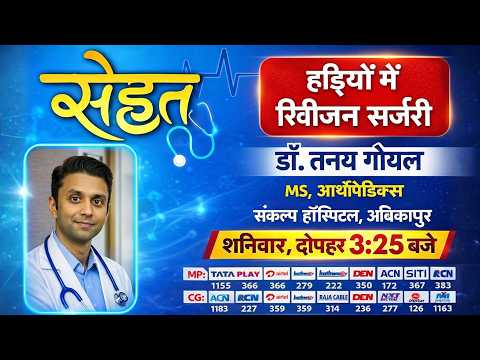 Why Your Bone Surgery Failed! The Truth About Revision Surgery!
Frequently Asked Questions
Related Articles